Electric vehicles are no longer rare in Houston. From daily Tesla commuters in Downtown to Rivian owners in Katy and Ford F-150 Lightning drivers across the suburbs, home EV charging has become part of everyday life. But while most homeowners focus heavily on buying the right electric vehicle, very few think about maintaining the charger powering it every night.
That changes the moment a charger suddenly stops working.
A charging session that fails overnight can throw off your entire schedule. A blinking red light on the charger creates immediate concern. And if the breaker trips repeatedly or the unit starts overheating, the issue quickly moves from inconvenient to potentially dangerous.
The good news is that most EV charger problems are preventable — and many are repairable without replacing the entire system.
This guide explains everything Houston homeowners need to know about EV charger service in 2026, including common warning signs, troubleshooting steps, maintenance schedules, repair costs, climate-related issues, and how to choose the right electrician when something goes wrong.
Why EV Charger Service Matters More in Houston
An EV charger is not just a plug on the wall. It is a high-powered electrical appliance operating daily under significant electrical load. Most Level 2 chargers run on 240V circuits and continuously deliver large amounts of current for hours at a time.
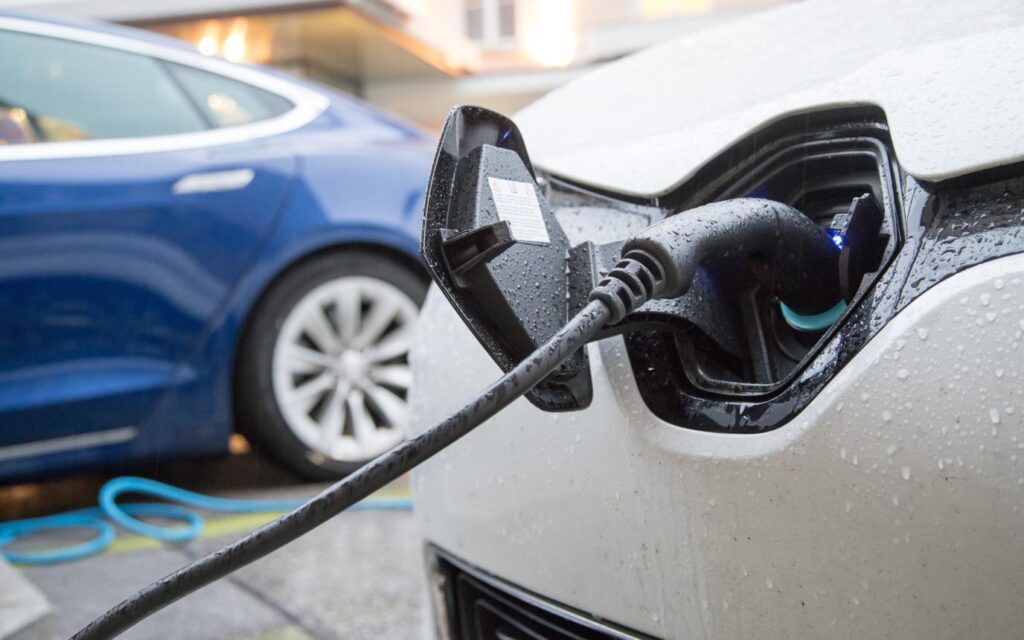
In Houston, chargers also face environmental conditions that accelerate wear faster than in many other cities.
Houston Heat Creates Extra Stress
During summer, garage temperatures in Houston regularly exceed 100°F. Outdoor chargers often sit in direct sunlight with heavy humidity. Over time, that heat affects:
- Internal circuit boards
- Connector pins
- Cable insulation
- Cooling systems
- Breaker performance
Even high-quality chargers experience thermal stress in these conditions.
If a charger already has a slightly loose electrical connection, Houston heat can make the problem worse much faster. Resistance increases, temperatures rise further, and eventually the charger may throttle charging speed, shut down unexpectedly, or fail completely.
Humidity and Storms Are Hard on Electrical Equipment
Houston’s climate combines extreme humidity with frequent thunderstorms and hurricane-related power fluctuations.
That combination creates two major long-term problems:
1. Connector Corrosion
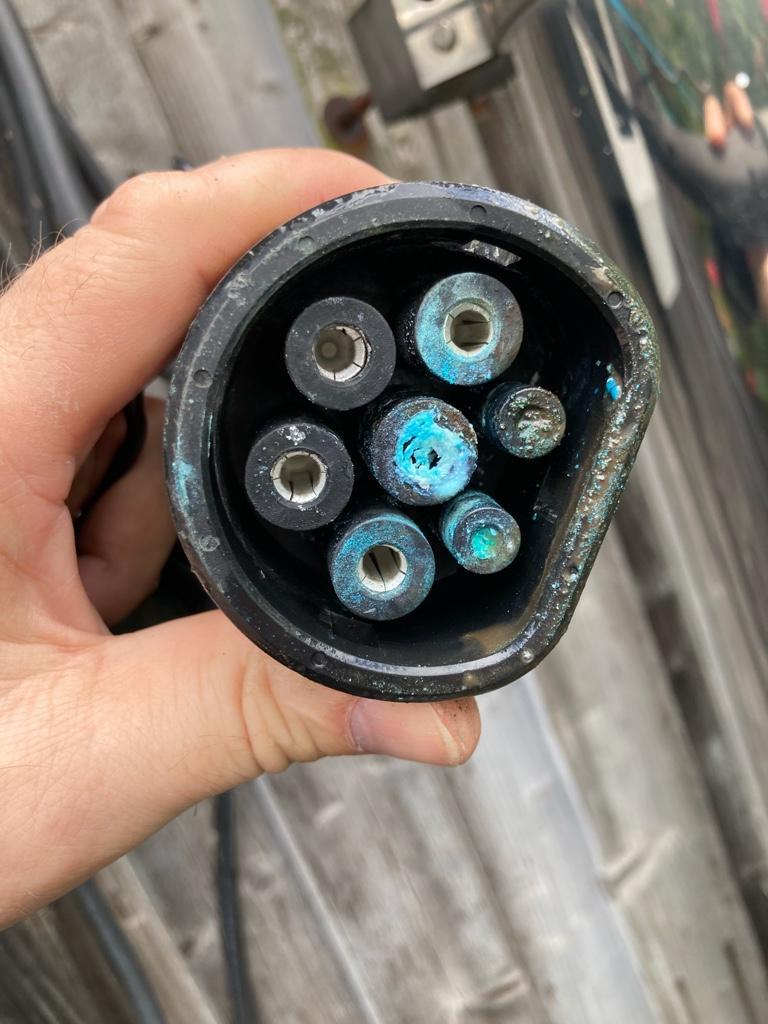
Outdoor chargers or chargers in poorly ventilated garages can slowly develop corrosion around the charging connector. This increases electrical resistance and reduces charging efficiency.
Signs include:
- Green or white residue on connector pins
- Charging interruptions
- Excessive heat near the connector
- Slower charging speeds
2. Voltage Fluctuations
Power surges and restoration spikes after outages can stress EV charger electronics over time.
Even when the charger appears functional afterward, internal damage may gradually develop inside:
- Relays
- Contactors
- Safety systems
- Smart charging boards
That is why annual inspections are especially important for Houston homeowners.
Common Signs Your EV Charger Needs Service
Many charger problems start small before becoming expensive failures.
These warning signs should never be ignored.
1. Charging Suddenly Becomes Slower
If your vehicle used to fully charge overnight but now takes significantly longer, something has changed.
Possible causes include:
- Loose wiring connections
- Breaker degradation
- Overheating protection activation
- Firmware problems
- Connector resistance buildup
A charger operating below normal amperage may still work — just inefficiently.
2. Red Lights or Error Codes Appear
Modern chargers continuously monitor:
- Ground faults
- Temperature
- Power delivery
- Vehicle communication
- Circuit safety
A red light means the charger detected a fault condition.
Sometimes it is minor. Sometimes it indicates a serious electrical issue.
Never ignore recurring fault codes.
3. Breaker Trips Repeatedly
A breaker exists to protect your home.
If it trips once, that may be random. If it trips repeatedly during charging sessions, something is wrong.
Common causes:
- Overheating breakers
- Loose terminals
- Internal charger faults
- Damaged wiring
- Moisture intrusion
Repeated resets without diagnosis can become dangerous.
4. The Charger Feels Hot
Warm is normal.
Hot is not.
Excessive heat near:
- the connector,
- breaker,
- cable,
- or wall behind the charger
usually indicates electrical resistance.
Resistance creates heat.
Heat damages components.
Damaged components create more resistance.
This cycle eventually causes failures or fire hazards.
5. Charging Stops Before Completion
If charging randomly ends overnight before reaching full battery level, possible causes include:
- Thermal shutdown protection
- Weak electrical connections
- Software communication errors
- Voltage instability
- Vehicle-side charging faults
This issue requires proper diagnosis rather than guessing.
6. Buzzing or Clicking Sounds
A faint hum is common during charging.
However:
- loud buzzing,
- crackling,
- irregular clicking,
- or humming from the breaker panel
should be inspected immediately.
Electrical arcing sometimes begins with unusual sounds before visible damage appears.
7. Visible Corrosion or Moisture
Houston humidity is especially problematic for outdoor chargers.
Watch for:
- rust,
- condensation,
- discoloration,
- cracked seals,
- or moisture near connectors.
Water intrusion is one of the most common causes of outdoor charger failure.
8. Home Lights Flicker During Charging
This may indicate:
- voltage drop,
- loose neutral connections,
- undersized wiring,
- or overloaded circuits.
This problem should not wait.
It affects not only the charger but potentially your home’s electrical system overall.
Troubleshooting Problems Before Calling an Electrician
Not every charger issue requires emergency service.
Some common problems can be safely checked by homeowners first.
Step 1: Check the Breaker
Go to your electrical panel and inspect the EV charger breaker.
If tripped:
- Turn it fully OFF
- Then fully ON
If it trips again immediately:
- stop resetting it,
- discontinue charger use,
- and call a licensed electrician.
Step 2: Restart the Charger
Many smart chargers experience temporary software faults.
Try:
- unplugging power temporarily,
- restarting the charger,
- reconnecting through the app,
- and checking for firmware updates.
This resolves more issues than most people expect.
Step 3: Inspect the Charging Connector
Look carefully for:
- bent pins,
- dirt,
- moisture,
- debris,
- or corrosion.
A dirty connector can interrupt vehicle communication and reduce charging performance.
Use only:
- dry microfiber cloths,
- or compressed air.
Never use liquid cleaners.
Step 4: Check Vehicle Charging Settings
Sometimes the charger is not the problem.
Many EVs allow:
- delayed charging schedules,
- charge rate limits,
- utility scheduling,
- or battery protection modes.
Verify:
- charging timers,
- off-peak schedules,
- and maximum amperage settings inside the vehicle.
Step 5: Test Another Charging Source
If possible:
- use another charger,
- public charging station,
- or Level 1 mobile connector.
This helps determine whether the issue is:
- the charger,
- or the vehicle itself.
When You Should Stop Troubleshooting Immediately
Certain warning signs require professional inspection right away.
Do not continue using the charger if you notice:
- burning smells,
- melted plastic,
- visible scorch marks,
- sparking,
- smoking,
- repeated breaker trips,
- or overheating.
Turn off the breaker and contact a licensed electrician immediately.
Annual EV Charger Maintenance Checklist
Preventive maintenance is much cheaper than emergency repairs.
A proper annual inspection usually includes:
Electrical System Inspection
A qualified electrician should:
- torque all panel connections,
- inspect breaker condition,
- verify wire integrity,
- test voltage delivery,
- inspect grounding,
- and confirm GFCI functionality.
Loose electrical connections are one of the most common long-term failure points.
Charger Inspection
The charger itself should be checked for:
- heat damage,
- moisture intrusion,
- cable wear,
- connector corrosion,
- firmware updates,
- mounting stability,
- and enclosure condition.
Outdoor units especially require seal inspections.
Cable Condition Check
Charging cables experience daily bending and stress.
Electricians inspect for:
- cracked insulation,
- internal conductor fatigue,
- exposed wire,
- or thermal damage.
Cable replacement is often cheaper than full charger replacement.
How Houston Weather Affects EV Chargers
Generic EV charging guides rarely discuss climate-specific issues.
Houston homeowners should understand these local risks.
Summer Charging Challenges
Charging immediately after driving in 100°F weather places stress on:
- the vehicle battery,
- charger electronics,
- and home electrical systems.
On extremely hot days:
- allow the vehicle to cool briefly,
- charge later at night,
- or use scheduled charging.
This reduces thermal strain.
Hurricane Season Preparation
Before major storms:
- unplug the vehicle,
- secure charging cables,
- inspect outdoor covers,
- and consider shutting off the charger breaker during severe lightning events.
After storms:
- inspect the charger visually before reuse,
- especially if flooding occurred nearby.
Winter Freeze Considerations
Houston freezes are rare but impactful.
Cold weather temporarily reduces EV charging speed because battery systems protect themselves.
This is usually normal behavior — not charger failure.
Repair vs Replace: Which Makes More Sense?
Not every faulty charger should be repaired.
Sometimes replacement is smarter financially.
Repair Usually Makes Sense When:
- The charger is under warranty
- The issue is minor
- The charger is under 4–5 years old
- The problem involves wiring or breakers
- Repair cost is relatively low
Examples:
- breaker replacement,
- connector cleaning,
- cable replacement,
- firmware fixes,
- or GFCI problems.
Replacement Usually Makes Sense When:
- The charger is older than 6 years
- Repair costs approach half the cost of replacement
- Internal electronics fail
- Parts are discontinued
- You want faster charging speeds
- You need smart features
Newer chargers now include:
- app controls,
- energy monitoring,
- load balancing,
- scheduling,
- and solar integration.
Typical EV Charger Service Costs in Houston (2026)
Actual pricing varies, but these are realistic Houston market ranges.
| Service | Typical Cost |
|---|---|
| Annual maintenance inspection | $75–$150 |
| Diagnostic service call | $85–$175 |
| Breaker replacement | $150–$280 |
| GFCI replacement | $80–$140 |
| Cable replacement | $150–$400 |
| Connector repair | $60–$120 |
| Weatherproofing repairs | $100–$200 |
| Full charger replacement labor | $150–$350 |
Emergency service often adds additional fees.
Always request written estimates before approving repairs.
Choosing the Right EV Charger Electrician in Houston
Not every electrician specializes in EV charging systems.
Experience matters.
Verify Licensing
Always confirm:
- Texas licensing,
- insurance,
- and local registration.
A legitimate electrician should willingly provide license information.
Ask About EV-Specific Experience
Different chargers use different systems.
Ask whether the electrician has experience with:
- Tesla Wall Connector
- ChargePoint
- Emporia
- JuiceBox
- Wallbox
- Autel
- Enphase
EV charging is specialized electrical work.
Look for Detailed Diagnostics
Quality electricians:
- explain findings,
- document problems,
- provide written estimates,
- and discuss long-term solutions.
Avoid contractors who immediately recommend full replacement without diagnosis.
How Long Do EV Chargers Typically Last?
Most quality Level 2 chargers last:
- approximately 10–15 years indoors,
- somewhat less outdoors in harsh climates.
The charging cable usually wears faster than the charger itself.
Proper maintenance significantly extends lifespan.
Should You Upgrade Older Chargers in 2026?
Many chargers installed in 2018–2020 are now technologically outdated.
Modern chargers offer:
- higher amperage,
- smarter scheduling,
- utility integrations,
- solar compatibility,
- and load-sharing systems.
If an older charger already requires major repair, replacement often delivers better long-term value.
Frequently Asked Questions
How often should an EV charger be serviced?
Once per year is the standard recommendation for Houston homeowners.
Outdoor chargers may benefit from additional visual inspections every few months.
Is it safe to charge during thunderstorms?
It is generally better to avoid charging during severe lightning storms when possible.
Power surges can stress charger electronics.
Can humidity damage my charger?
Yes.
Houston humidity accelerates corrosion, especially on outdoor-mounted units and connectors.
Why does my charger stop charging overnight?
Possible causes include:
- overheating,
- communication errors,
- scheduled charging settings,
- breaker problems,
- or electrical faults.
Recurring interruptions should be professionally diagnosed.
Do EV charger repairs require permits in Houston?
Minor repairs usually do not.
Circuit modifications, breaker replacements, or wiring work often do require permits.
A licensed electrician should handle permitting properly.
Final Thoughts
EV chargers are incredibly reliable when properly installed and maintained. But like HVAC systems, generators, and other high-demand electrical equipment, they require periodic attention — especially in Houston’s climate.
Ignoring small warning signs often turns inexpensive repairs into major electrical problems later.
If your charger is:
- overheating,
- slowing down,
- tripping breakers,
- showing fault codes,
- or behaving differently than normal,
address the issue early.
Routine service is far cheaper than emergency replacement — and much safer as well.