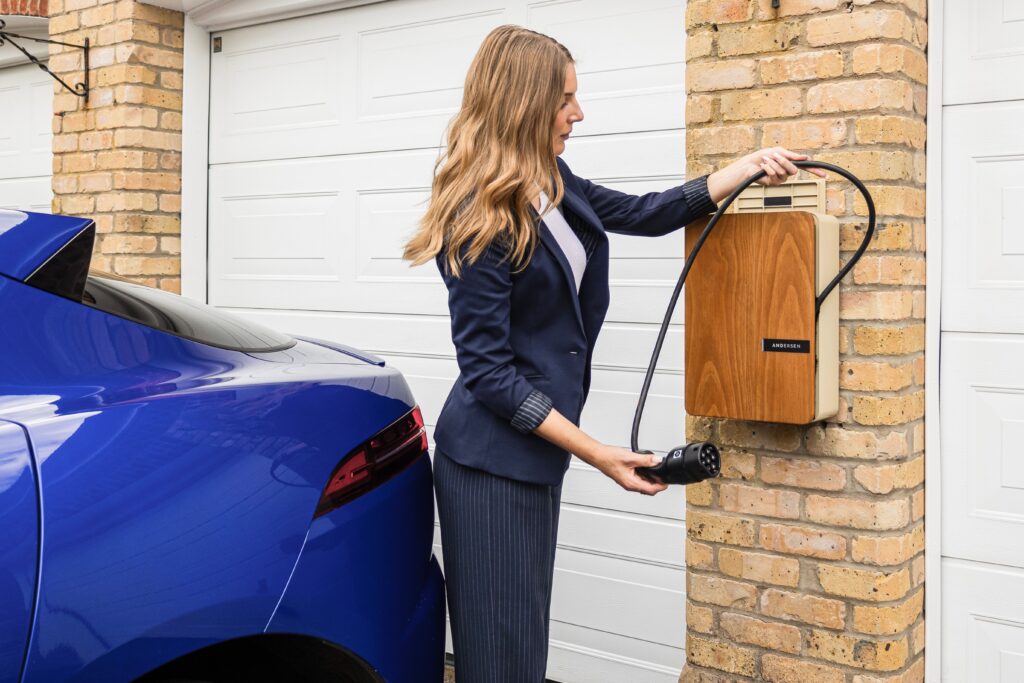
You have decided to get a home EV charger. Smart move. But before you call a Houston electrician, you need to choose the actual charger — because the unit you pick determines what circuit your electrician installs.
Get this step wrong and you may end up with a charger that underperforms your EV, or worse, need a second electrician visit to upgrade the circuit later.
This post walks you through exactly what to look for so you buy the right Level 2 charger the first time.
Why the Charger Choice Comes Before the Electrician Call
Most Houston homeowners call an electrician first and ask what charger to buy. That is backwards.
Your charger’s amperage determines the breaker size and wire gauge your electrician installs. A 32-amp charger needs a 40-amp breaker. A 48-amp charger needs a 60-amp breaker. If you buy the charger after the electrician installs a 40-amp circuit, you are stuck with Level 2 speeds that leave your EV’s full charging capability on the table.
Decide on the charger first. Then your electrician installs the circuit sized correctly from day one.
For the full installation process once you’ve chosen your charger, see our Complete Guide to EV Charger Installation in Houston.
Step 1 — Match the Charger Amperage to Your EV
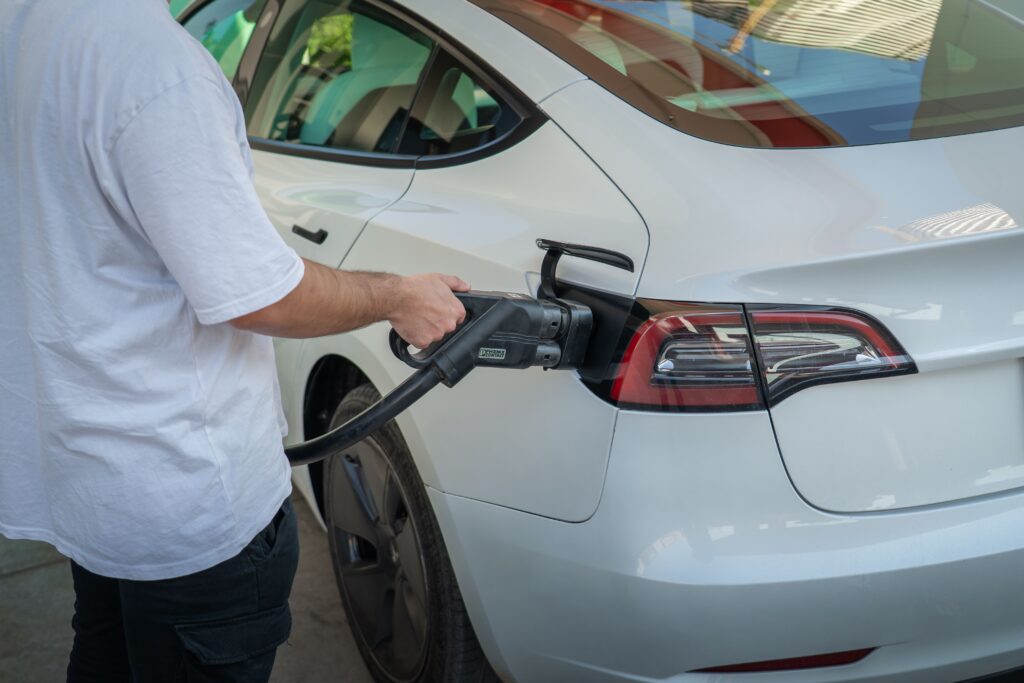
Every EV has a maximum onboard AC charging rate. Feeding it more power than it can accept does nothing. Feeding it less means slower charging than the vehicle is capable of.
Common EV onboard charger ratings:
| Vehicle | Max AC Charging Rate | Recommended Charger |
|---|---|---|
| Tesla Model 3 / Y | 11.5 kW (48A) | 48-amp |
| Tesla Model S / X | 11.5 kW (48A) | 48-amp |
| Chevy Equinox EV | 11.5 kW (48A) | 48-amp |
| Ford F-150 Lightning | 19.2 kW (80A) | 48-amp (home max) |
| Rivian R1T / R1S | 11.5 kW (48A) | 48-amp |
| Hyundai Ioniq 6 | 11 kW (48A) | 48-amp |
| Toyota bZ4X | 6.6 kW (32A) | 32-amp |
| Nissan Leaf (6.6 kW) | 6.6 kW (32A) | 32-amp |
| Nissan Leaf (22 kW) | 22 kW — capped at 7.2 kW on L2 | 32-amp |
| Plug-in Hybrids (most) | 3.3–7.2 kW | 32-amp |
Bottom line: If you drive a Tesla, Rivian, Chevy Equinox EV, Ford Lightning, or Ioniq — go 48-amp. For most plug-in hybrids and older EVs with 6.6 kW onboard chargers, 32-amp is plenty.
If you are not sure, look up your vehicle’s onboard AC charger specification in the owner’s manual under charging specifications.
Step 2 — Hardwired or Plug-In?
This is the second big decision and it comes down to your living situation.
Hardwired:
- Permanently connected directly to your electrical panel
- Cleaner installation, no outlet required
- Slightly more reliable long-term (one less connection point)
- Best for homeowners who are not planning to move
Plug-in (NEMA 14-50):
- Plugs into a 240V outlet your electrician installs
- Charger can be unplugged and taken with you if you move
- Slightly easier to swap to a different charger later
- Good for renters with landlord permission or homeowners who may relocate
Both options deliver identical charging speeds. The difference is purely about flexibility vs permanence.
Houston consideration: If you are installing in an attached garage and own the home, hardwired is the cleaner choice. If you are in a Houston townhome or rental situation, plug-in gives you flexibility.
Step 3 — Smart Features: Do You Need Them?
A basic Level 2 charger plugs in and charges. A smart charger adds Wi-Fi connectivity, scheduling, energy monitoring, and app control. In Houston, smart features have a real financial benefit.
Why smart features matter in Houston:
Houston’s deregulated electricity market means you choose your retail electric provider. Many providers — like Green Mountain Energy, Reliant, and TXU — offer time-of-use rate plans where overnight electricity (typically 9 PM – 6 AM) costs significantly less than peak daytime rates.
A smart charger lets you set a departure time. The charger automatically calculates when to start charging so your car is full when you wake up — without you touching anything each night. Over a year of daily charging, this scheduling can save $150–$400 depending on your rate plan and how many miles you drive.
Smart charger features worth paying for:
- Scheduling / departure time
- Real-time energy monitoring
- Load management / power sharing (useful if you have two EVs)
- Alexa / Google Home integration
- Over-the-air firmware updates
Features that are nice but not essential:
- Solar integration (only relevant if you have solar panels)
- OCPP protocol (relevant for commercial use, not typical home use)
Step 4 — Top Level 2 Charger Recommendations for Houston Homes
Best overall: ChargePoint Home Flex
- 16–50 amp adjustable (future-proof if you upgrade your panel later)
- Excellent app with scheduling and energy tracking
- Works with any EV
- Around $699 retail
- NEMA 14-50 or hardwired installation
Best value smart charger: Emporia EV Charger
- 48-amp, hardwired
- Best-in-class energy monitoring — integrates with Emporia home energy monitor
- Around $229 retail
- Ideal for Houston homeowners on time-of-use rate plans
Best for Tesla owners: Tesla Wall Connector Gen 3
- Up to 44 miles of range per hour
- Seamless Tesla app integration
- Power sharing between multiple Wall Connectors
- Around $425 retail
- Hardwired installation
Best for two EVs: Wallbox Pulsar Plus
- 48-amp with built-in power boost / load management
- Can dynamically limit draw when other large appliances are running — may eliminate need for panel upgrade
- Around $649 retail
Best budget option: Lectron Level 2 Charger
- 32-amp, plug-in
- No smart features but reliable and affordable
- Around $199 retail
- Good for plug-in hybrids or secondary vehicles
What to Tell Your Electrician
Once you have chosen your charger, give your Houston electrician these three pieces of information before they quote the job:
- The charger model and its amperage (e.g., “Emporia 48-amp hardwired”)
- Hardwired or NEMA 14-50 outlet — so they know what to install
- Exact mounting location — garage wall, exterior wall, specific side of the garage
With this information, your electrician can give you an accurate quote that covers the right breaker size, wire gauge, and conduit run length.
For what happens next — permits, installation day, and timeline — read our Complete Guide to EV Charger Installation in Houston.
Related Posts
- Complete Guide to EV Charger Installation in Houston
- What to Expect on EV Charger Installation Day in Houston
- Best Locations to Mount Your Home EV Charger in Houston
- Home Electrical Panel Upgrades for EV Charger Installation Houston
- EV Charger Installation Cost in Houston
- Tesla Charger Installation Houston