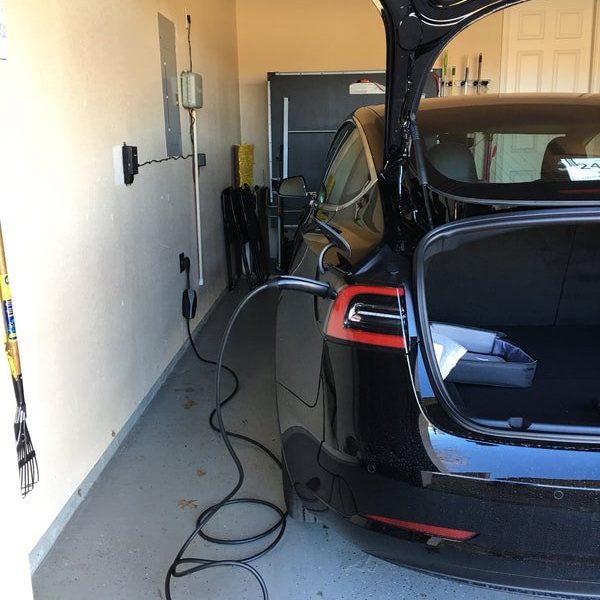
Why Houston EV Charger Installations Require a Permit
Installing an EV charger at home is not simply plugging in a device. A Level 2 charger requires a new dedicated 240-volt circuit connected directly to your electrical panel. Any new circuit addition in Houston legally requires an electrical permit issued by the City of Houston Permitting Center.
Skipping the permit creates three serious problems that Houston homeowners consistently underestimate.
| Risk | Consequence |
|---|---|
| No insurance coverage | Homeowner’s insurance may deny fire or electrical damage claims from unpermitted work |
| Home sale complications | Buyers, title companies, and inspectors flag unpermitted electrical circuits |
| Safety liability | Uninspected wiring or incorrect breaker sizing creates real fire and shock hazards |
A licensed Houston electrician handles the permit application on your behalf. Understanding the process helps you ask the right questions, verify your electrician is doing things correctly, and avoid costly delays.
Which Installations Require a Permit in Houston
Not every charging setup triggers a permit requirement. Here is a clear breakdown based on current City of Houston guidelines.
| Installation Type | Permit Required? |
|---|---|
| Level 1 charger — existing outlet | No |
| Level 2 charger — new dedicated 240V circuit | Yes |
| NEMA 14-50 outlet installation — new circuit | Yes |
| Panel upgrade for EV charger | Yes |
| Outdoor conduit installation | Yes |
| Replacing existing charger — same circuit, no changes | Usually No |
| Commercial multi-station installation | Yes — with engineering drawings |
If your electrician tells you a Level 2 installation does not need a permit, treat that as a serious red flag. Any competent licensed Houston electrician handles this requirement without being asked.
If you are planning a standard home charger setup, our Level 2 EV charger installation Houston guide covers the full process including electrical requirements and panel sizing.
How the Houston Permit Process Works — Step by Step
Step 1 — Hire a Licensed Master Electrician
The City of Houston issues electrical permits only to registered master electricians. Homeowners cannot pull electrical permits themselves for this type of work. Before signing any agreement, verify your electrician holds:
| Credential | How to Verify |
|---|---|
| Texas TDLR electrical license | tdlr.texas.gov license search |
| City of Houston contractor registration | Houston Permitting Center records |
| Active insurance and bond | Request certificate of insurance directly |
Step 2 — Electrician Submits Application Through iPermits
Houston uses the iPermits online portal at pdinet.pd.houstontx.gov for electrical permit applications. Your electrician logs into their registered account and submits the application with the following details:
| Application Field | What It Covers |
|---|---|
| Scope of work | New circuit, breaker size, charger type |
| Panel information | Panel size, available capacity |
| Charger specifications | EV1, EV2, or EV3 classification |
| Installation location | Indoor garage, outdoor driveway, etc. |
Most straightforward residential EV charger permits are processed within one to five business days. Commercial installations or projects requiring plan review may take longer.
Step 3 — Permit is Issued and Work Begins
Once approved, the electrician receives the permit and installation begins. The permit number and approved plans must be kept on site during all work. Work performed before permit issuance can result in stop-work orders and mandatory removal of completed circuits.
Step 4 — Final Inspection is Scheduled
After installation, a City of Houston electrical inspector visits the property. Houston homeowners and electricians schedule inspections through the Interactive Voice Response (IVR) system at 713-222-9922. Have your project number and scheduling PIN ready when calling.
If corrections are required during inspection, the work must be corrected and a new inspection scheduled before the permit closes.
Step 5 — Certificate of Completion
Once the inspection passes, the permit closes and the installation is confirmed as code-compliant. Keep this document with your home records. It protects your insurance coverage and supports your home’s resale value.
How Much Does an EV Charger Permit Cost in Houston
Permit fees in Houston are calculated based on the value and scope of the electrical work being performed.
For a full breakdown of what Houston homeowners pay beyond the permit fee, see our detailed guide on EV charger installation cost in Houston.
| Project Scope | Estimated Permit Fee |
|---|---|
| Basic circuit addition — under $1,000 total work | $75 – $100 |
| Standard Level 2 install — $1,000 to $2,500 total | $100 – $200 |
| Installation with panel upgrade | $150 – $300 |
| Large commercial installation | $200 – $500+ |
These figures reflect 2026 City of Houston fee schedules. Always ask your electrician to itemize the permit fee separately in their quote so you can verify it matches what was actually submitted to the city.
Federal Tax Credit — What Houston Homeowners Must Know Before June 30, 2026
This section is critical and many Houston EV owners miss it entirely.
The federal Section 30C Alternative Fuel Vehicle Refueling Property Credit currently covers 30% of qualified EV charger installation costs, up to $1,000 per port for eligible residential installations.
| Detail | Information |
|---|---|
| Credit amount | 30% of eligible costs, max $1,000 per port |
| Current deadline | June 30, 2026 for guaranteed 2026 tax filing |
| Eligibility requirement | Installation must be in an eligible census tract |
| What qualifies | Charger hardware and licensed installation labor |
| IRS form | Form 8911 |
To confirm your Houston address falls in an eligible census tract, use the IRS census tract lookup tool or ask your tax advisor. Installations placed in service after June 30, 2026 may still qualify through 2032 under current law, but the guaranteed window for 2026 tax year filing closes at that date.
Your licensed electrician’s permit and inspection paperwork serves as documentation for this credit. Keep all records.
CenterPoint Energy and EV Charger Permits
Houston’s primary electricity distributor is CenterPoint Energy. While CenterPoint does not issue installation permits, they affect your project in two important ways.
Service Upgrades: If your installation requires a meter upgrade or utility service change — not just a panel upgrade — your electrician must coordinate directly with CenterPoint separate from the city permit process. This coordination can add two to four weeks to your project timeline and should be identified during your initial site assessment, not discovered mid-project.
Time-of-Use Rate Plans: After your installation passes inspection, contact your retail electricity provider about off-peak rate plans compatible with CenterPoint’s grid. Smart chargers from brands like ChargePoint and JuiceBox allow you to schedule overnight charging during lower-rate periods, reducing your monthly electricity cost meaningfully over time.
What the Inspector Checks During Final Inspection
Houston electrical inspectors follow National Electrical Code Article 625 requirements during EV charger inspections. Here is what they verify:
| Inspection Item | What Passes / What Fails |
|---|---|
| Breaker sizing | Must follow NEC 80% rule — 48A charger needs 60A breaker |
| Wiring gauge | 6-gauge copper for 50A circuits, 8-gauge for 40A circuits |
| Outdoor conduit | Must be weather-sealed with appropriate fittings for Houston humidity |
| Charger mounting | Must be secure — no exposed connections or open junction boxes |
| Grounding | Proper grounding connection verified at panel and charger |
| GFCI protection | Required for outdoor and garage installations per NEC |
Exposed wiring connections and improper breaker sizing are the two most common reasons Houston EV charger inspections fail on first visit.
Common Permit Mistakes Houston Homeowners Should Avoid
| Mistake | Why It Costs You More |
|---|---|
| Hiring an unlicensed electrician to skip permit fees | Insurance won’t cover damage; rework required when discovered |
| Assuming the charger brand handles permits | Tesla, ChargePoint, JuiceBox — none handle local permits Tesla owners should review our dedicated Tesla charger installation Houston guide for model-specific wiring and permit details. |
| Starting work before permit approval | Stop-work orders, fines, mandatory removal of completed work |
| Not scheduling final inspection | Permit stays open; installation is not legally code-compliant |
| Ignoring the 30C tax credit deadline | Missing June 30, 2026 means losing up to $1,000 in credits |
Houston Neighborhoods — Permit Considerations by Area
Different Houston neighborhoods present different permit and installation conditions. Knowing your area helps you plan realistically.
| Neighborhood / Area | Key Consideration |
|---|---|
| Katy and Sugar Land | Newer construction, 200A panels common, straightforward permits |
| The Heights and Montrose | Older homes, possible 100A panels or dated wiring, may need evaluation |
| Pearland and League City | Split jurisdiction — confirm correct permitting authority by address |
| The Woodlands | Montgomery County jurisdiction — separate process from City of Houston |
| Cypress and Spring | Generally newer homes, City of Houston or Harris County jurisdiction varies |
| Downtown and Midtown | Older buildings, commercial permits may apply for multi-unit properties |
Always confirm the correct permitting jurisdiction with your electrician before assuming City of Houston rules apply to your specific address.
Frequently Asked Questions — EV Charger Permit Houston
Do I need a permit for a Level 2 EV charger in Houston? Yes. Any Level 2 EV charger installation that requires a new dedicated 240-volt circuit requires an electrical permit from the City of Houston Permitting Center. Your licensed electrician applies for this permit on your behalf through the iPermits system.
Can I install my own EV charger without a permit in Houston? No. Houston only issues electrical permits to registered master electricians. Homeowner self-installation of a new 240-volt circuit is not permitted and creates serious insurance and liability risks.
How long does an EV charger permit take in Houston? Straightforward residential permits typically process within one to five business days through the iPermits portal. Projects requiring plan review or panel upgrades with utility coordination can take two to four weeks.
What happens if I install a charger without a permit in Houston? Unpermitted electrical work can result in stop-work orders, fines, and required removal of completed work. More practically, your homeowner’s insurance may deny claims related to electrical damage from unpermitted installations, and the issue will surface during any future home sale.
Does a permit cover the federal 30C tax credit? Your permit and inspection documentation serves as evidence of a legal, code-compliant installation — which is required to claim the federal Section 30C credit. The credit deadline for guaranteed 2026 tax year filing is June 30, 2026.
Who do I call to schedule a Houston EV charger inspection? Inspections are scheduled through Houston’s Interactive Voice Response system at 713-222-9922. Your electrician will typically handle this step, but knowing the number lets you follow up directly if needed.
Pros and Cons of Going Through the Permit Process
| Pros | Cons |
|---|---|
| Full legal compliance with Houston codes | Adds 1–2 weeks to project timeline |
| Homeowner insurance remains valid | Adds $75–$200 to overall project cost |
| Supports home resale value | Requires scheduling a final inspection visit |
| Confirms installation safety via inspection | Requires a licensed master electrician |
| Qualifies installation for federal 30C tax credit | Panel issues discovered during inspection may add cost |
The permit process protects your investment. For most Houston homeowners the added time and cost is a minor consideration compared to the insurance protection, legal compliance, and tax credit eligibility it provides.
The permit process protects your investment. For most Houston homeowners the added time and cost is a minor consideration compared to the insurance protection, legal compliance, and tax credit eligibility it provides. Ready to get started? Get a free quote from a licensed Houston installer and we will handle the permit process for you.