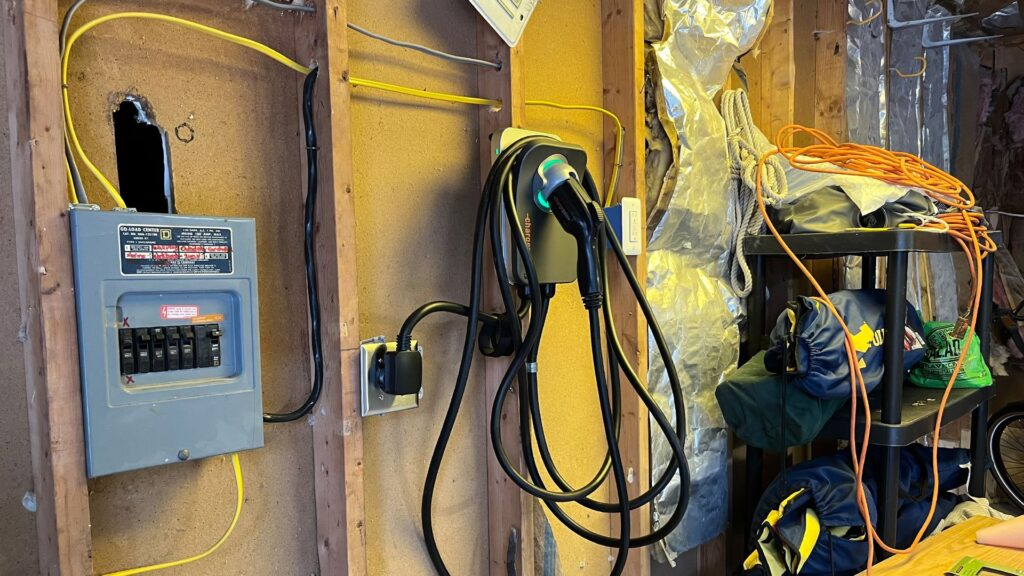
The short answer: A standard Level 2 EV charger installation in Houston takes 2 to 4 hours for the physical work on the day itself. If your home needs a panel upgrade or the wiring run is unusually long, budget a full day. If the job requires a permit — which most Houston installations do — add 1 to 5 business days for the permit to be issued before work begins, plus a follow-up inspection afterward.
If you just bought an electric vehicle and you’re trying to figure out how quickly you can get a home charger set up in Houston, this guide gives you the honest answer — including the parts most other websites skip over, like what the City of Houston permit process actually adds to your timeline, and what happens if your electrical panel is not ready for a 240-volt circuit.
We’ll walk through every variable so you can plan your installation realistically, not based on a best-case estimate.
The Quick-Answer Timeline by Scenario
Not every installation is the same. Here’s what real Houston EV charger installations typically look like across the most common situations:
2–4 hours
Straightforward install
Panel has space, garage is close to breaker box, no structural work needed. This is the most common outcome for homes built after 2000.
4–8 hours
Longer wiring run
Charger location is far from the panel, conduit through walls or attic required, or outdoor mounting with weatherproofing.
1–2 days
Panel upgrade needed
Panel is at capacity or too old to support a new 240V circuit. CenterPoint Energy coordination required for meter disconnect.
1–3 weeks total
Full project with permit + inspection
Permit pulled before work starts, installation completed, City of Houston inspection scheduled and passed. This is the correct, legal process.
The key distinction most homeowners miss: there is a difference between how long the physical installation takes and how long the full project takes from the day you call an electrician to the day your charger is fully operational and inspected. In Houston, doing it properly means accounting for both.
| Stage | Typical time in Houston | Notes |
|---|---|---|
| Initial electrician assessment | 30–60 min (same visit or virtual) | Panel check, circuit routing, charger location confirmed |
| Permit application (iPermits) | 1–5 business days | Filed by your licensed electrician with the City of Houston |
| Physical installation day | 2–4 hours (simple) / full day (complex) | Circuit, wiring, charger mount, testing |
| City of Houston inspection | 1–7 business days to schedule | Required for permitted work; electrician handles coordination |
| Panel upgrade (if needed) | 1 full day + CenterPoint coordination | Adds time due to utility scheduling requirements |
| Total project (simple, permitted) | 5–14 calendar days | From first call to inspection passed |
What Actually Controls How Long the Installation Takes
Every Houston home is different, and the variables that affect your installation timeline are almost entirely about your existing electrical setup — not the charger itself. The charger goes on the wall in 30 minutes. What takes time is getting the electricity to it safely and legally.
1. Your electrical panel’s current condition
This is the single biggest factor. A Level 2 EV charger requires a dedicated 40- to 50-amp circuit running on 240 volts — the same type of circuit your electric dryer uses. If your main electrical panel already has an open breaker slot of the right size, this part is straightforward. If your panel is full, undersized, or older than 25–30 years, your electrician will tell you that a panel upgrade is necessary before the charger can be safely installed.
In Houston’s older neighborhoods — Montrose, Heights, Garden Oaks, parts of Meyerland — homes from the 1960s and 1970s sometimes still have 100-amp panels or outdated wiring. These situations add significant time and cost to the project. In newer subdivisions like Cypress, Sugar Land, and Katy, most homes have modern 200-amp panels with available breaker space, and installations tend to be quick.
2. Distance between the panel and the charger location
The farther your charger needs to be from your main breaker box, the more wire and conduit the electrician has to run, and the longer the job takes. A garage on the other side of the house from the panel, or a driveway charger that requires outdoor conduit buried or surface-mounted along the exterior wall, will add time compared to a simple garage install where the panel is steps away.
3. Whether the installation is indoor or outdoor
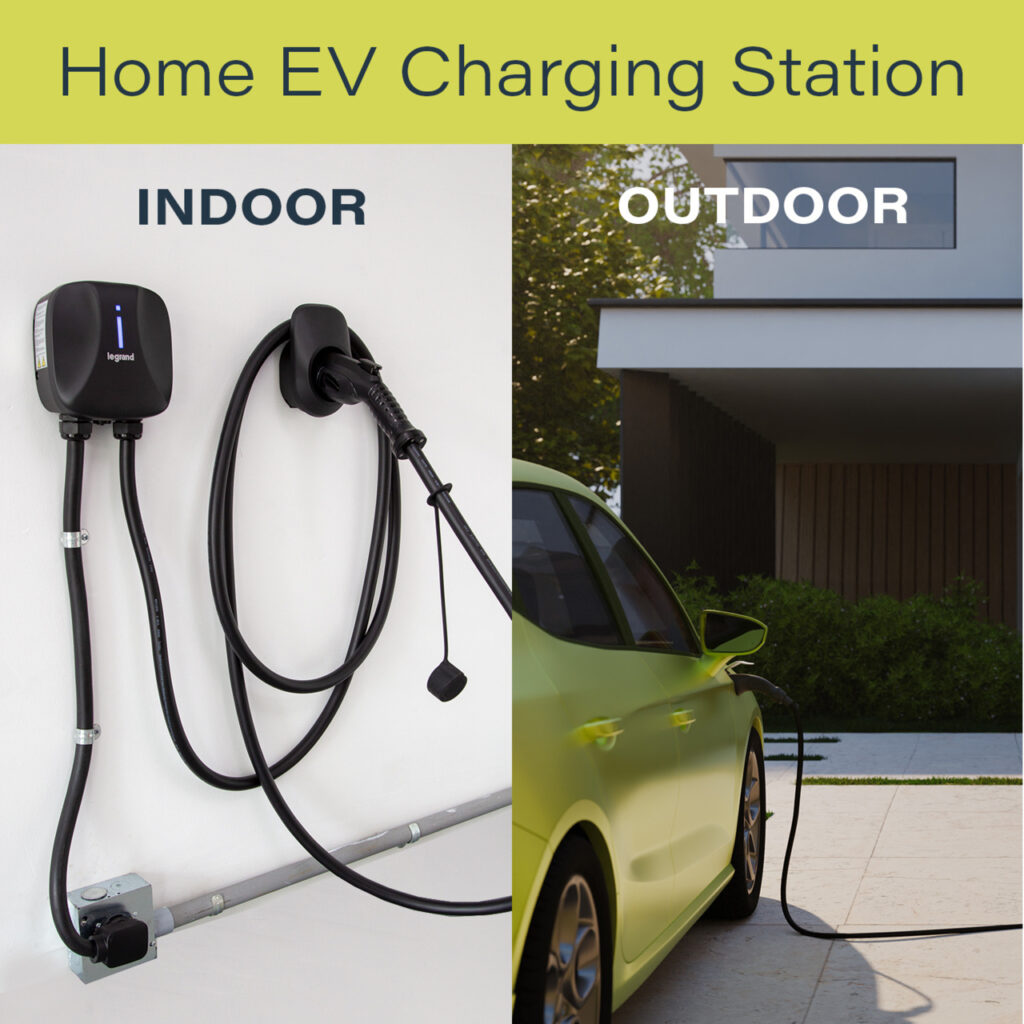
Outdoor installations require weatherproof housing, GFCI protection, and proper mounting that can handle Houston’s heat, humidity, and occasional severe weather. This adds steps that an indoor garage mount does not require. Houston’s climate is genuinely punishing on electrical equipment — experienced local electricians know to use appropriate materials rated for high-humidity, high-temperature environments.
4. The charger brand and model
Some chargers are hardwired directly into the circuit, which is slightly more involved than a plug-in unit connected to a NEMA 14-50 outlet. Tesla Wall Connectors, for example, are hardwired installations. Most other Level 2 chargers like ChargePoint Home Flex, Emporia, and JuiceBox can be either hardwired or plug-in, depending on your preference. Hardwired takes a bit longer but is generally considered the cleaner, more permanent solution.
5. Conduit routing through walls or attic
If the electrician needs to route conduit through finished walls, an attic space, or a crawl space, that work takes longer than surface-mounted conduit along a garage wall. In some older Houston homes, this may also involve working around insulation, existing wiring, or structural elements that complicate the routing path.
What experienced Houston electricians say: “The charger itself goes on the wall in about 30 minutes. What takes time is the circuit work — running the wire, installing the breaker, securing conduit, and making sure everything is correct before we test. For a clean, simple install in a modern home, two to three hours is realistic. For anything more complex, we tell customers to plan for a full day.”
Houston Permits and How They Affect Your Schedule
In the City of Houston, an electrical permit is required for EV charger installations. This is not optional, and it matters for reasons beyond just following the rules.
According to the Houston Permitting Center, electrical permits for EV charging outlets must be applied for by a licensed electrical contractor registered with the City of Houston. The EV charger type (EV1 for Level 1, EV2 for Level 2, EV3 for DC fast) must be noted on the application. Applications go through the city’s iPermits system.
Once the permit is issued and the work is completed, a City of Houston electrical inspector must inspect the installation. The manufacturer’s installation manual and permit documents must remain on-site during all work and inspections.

Why skipping the permit is a serious mistake
Some electricians — especially the cheaper, unlicensed ones — will offer to skip the permit to save time and money. Do not accept this offer. Here’s why it matters for Houston homeowners specifically:
- Homeowner’s insurance: Unpermitted electrical work voids your homeowner’s insurance coverage for any incident related to that work. If a wiring fault causes a fire, you may not be covered.
- Home resale: Unpermitted work must be disclosed to buyers in Texas and can derail a sale or force you to remove and redo the installation at your own cost.
- CenterPoint coordination: If your project requires a panel upgrade, CenterPoint Energy only reconnects your meter after a permit number or inspection approval is provided to their Permit Desk.
- Safety: The inspection process exists to catch wiring errors before they become hazards. A dedicated 240V circuit that is incorrectly wired is a fire risk.
How to speed up the permit process: Ask your electrician to pull the permit before your scheduled installation date — not on the same day. Most registered Houston electricians can submit through iPermits quickly, but processing takes 1 to 5 business days. Getting the permit ahead of time means the installation can happen without waiting.
What about CenterPoint Energy’s role?
CenterPoint Energy manages the electrical distribution infrastructure across the Houston area. For standard EV charger installations that don’t require a meter or service upgrade, CenterPoint involvement is minimal — your electrician handles everything. However, if your installation requires a Meter Loop Service (MLS) upgrade — meaning your home’s incoming service capacity needs to increase — CenterPoint must be notified and must physically disconnect your meter before work begins. This coordination adds time and should be factored into your project schedule.
Panel Upgrades: The Biggest Timeline Wildcard
If your electrician assesses your panel and tells you that an upgrade is needed before installing the EV charger, your project timeline changes significantly. This is the situation that catches the most Houston homeowners off guard, so it’s worth understanding clearly.
When is a panel upgrade actually necessary?
A panel upgrade is required when one or more of the following is true:
- Your panel is rated at less than 200 amps and your home already runs heavy electrical loads (pool pump, two HVAC systems, electric appliances)
- All breaker slots in your current panel are occupied with no room for a new 40- or 50-amp dedicated circuit
- Your panel is an older brand or model that has known reliability issues or is no longer code-compliant
- Your wiring is aluminum branch circuit wiring from the 1960s–70s, which requires specific handling for new circuit additions
How long does a panel upgrade add to the timeline?
A panel upgrade in Houston typically takes one full day of work. The process involves your electrician submitting additional permit applications, CenterPoint Energy disconnecting your meter (usually scheduled for an early morning time slot), the panel replacement itself, reconnection, and a separate inspection. From the day you decide to proceed, budget one to two additional weeks for a panel upgrade before the EV charger installation can be completed.
Important: Houston has unique grounding requirements due to the area’s clay-heavy soil and high water table. A qualified Houston electrician will verify that your grounding system meets the required standards as part of any panel work. This is a local code consideration that electricians from outside the Houston area may not be aware of.
What Happens on Installation Day, Step by Step
Once the permit is in hand and your panel is confirmed ready, the actual installation day is straightforward. Here is exactly what a licensed Houston electrician does from the moment they arrive:
Step 1: Final site assessment (15–30 minutes)
The electrician confirms the installation location, identifies the best route for the wiring run, and checks that the panel situation matches what was assessed during the initial quote. No surprises should emerge at this stage if the pre-assessment was done properly.
Step 2: Install the dedicated circuit breaker (15–20 minutes)
A new 40-amp or 50-amp double-pole breaker is installed in your main panel. This is the breaker that will power your EV charger exclusively. A dedicated circuit means nothing else draws from this breaker, which is what makes Level 2 charging safe and reliable.
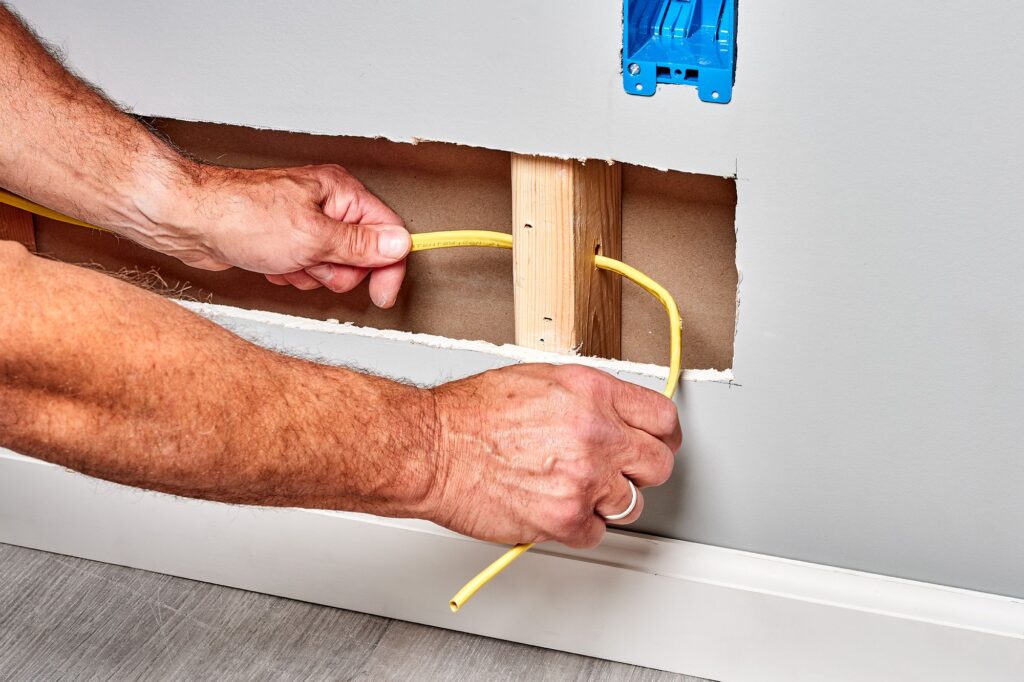
Step 3: Run the wiring and conduit (45–120 minutes)
This is usually the longest part of the job. The electrician runs appropriately-gauged wire (typically 8 AWG for a 40-amp circuit) from the panel to the charger location, through conduit where required. If the run is through a garage wall, attic, or along an exterior surface, this step takes longer. The wire must be secured, protected from damage, and properly supported along its entire length per the National Electrical Code and Houston’s local amendments.
Step 4: Mount the charger and make the connection (20–30 minutes)
The EV charger unit is mounted on the wall at a height and position that works for your vehicle’s charging port location. If it’s a hardwired installation, the wires are connected directly to the unit. If it’s a plug-in charger, a NEMA 14-50 outlet is installed first, then the charger is plugged in.
Step 5: Test the installation (15–20 minutes)
The electrician powers on the circuit, tests voltage at the outlet or charger, confirms the circuit breaker trips correctly, and tests the charger with your actual vehicle if it’s on-site. This step confirms the installation is working before they leave.
Step 6: Documentation and permit close-out
Your electrician provides you with documentation of the work, and coordinates the City of Houston inspection. You do not need to be home for most inspections, but someone must be able to provide the inspector access to the charger and panel. Once the inspection is passed, the permit is closed and the job is officially complete.
Houston-tested tip: Schedule your installation for a weekday morning if possible. CenterPoint Energy-related coordination, permit offices, and City of Houston inspectors all operate on standard business hours. Weekend installations can be done for the physical work, but anything requiring utility or city involvement will need to wait until Monday.
Level 1 vs Level 2 vs DC Fast Charger: Time to Install
The level of charger you choose has a direct impact on how involved the installation is.
| Charger level | Voltage required | Installation complexity | Install time | Permit required in Houston? |
|---|---|---|---|---|
| Level 1 | 120V standard outlet | None — plugs into existing outlet | Zero installation time | No (if using existing outlet) |
| Level 2 | 240V dedicated circuit | Moderate — new circuit, breaker, wiring | 2–8 hours depending on home | Yes — electrical permit required |
| DC Fast Charger (Level 3) | 480V+ three-phase power | High — commercial-grade electrical service | Days to weeks | Yes — multiple permits, engineering review |
Why almost every Houston homeowner chooses Level 2
Level 1 charging — plugging your car into a regular 120-volt outlet — requires no installation work, but it adds only 3 to 5 miles of range per hour. For the average Houston driver covering 30 to 50 miles a day across long commutes, Level 1 simply cannot keep up. You would need to leave your car plugged in for 40 or more hours to get a full charge on most EVs.
Level 2 changes everything. A properly installed 240-volt Level 2 charger adds 20 to 30 miles of range per hour, meaning most Houston drivers can plug in when they get home and wake up to a completely full battery. This is why Level 2 is the standard recommendation for residential installation, and it’s what the majority of Houston homeowners are installing.
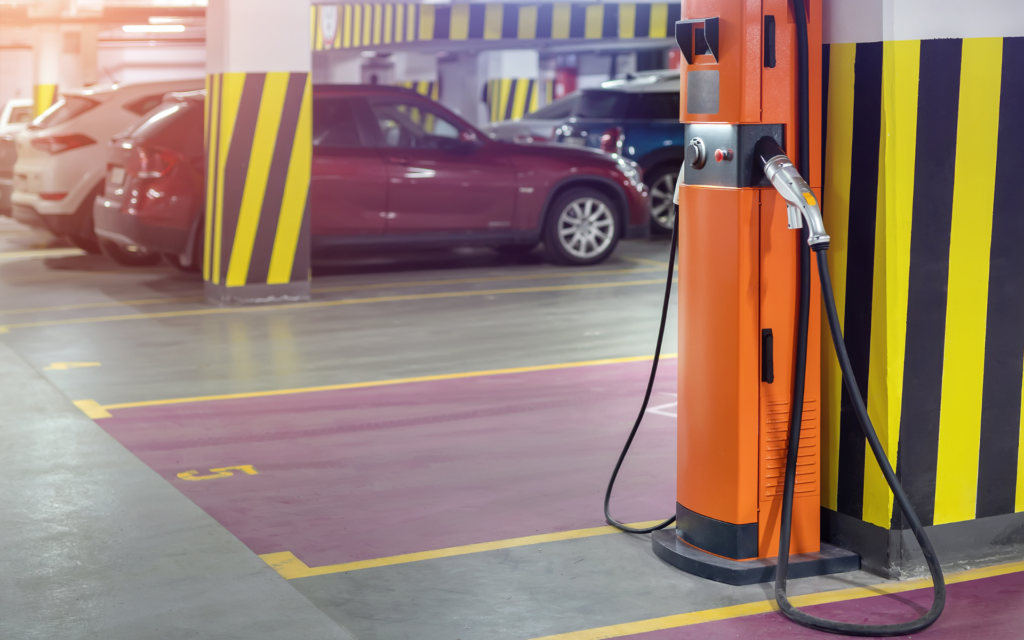
DC fast chargers (Level 3) are not practical for residential use. They require three-phase electrical power, industrial-grade equipment, and infrastructure that is not available in residential neighborhoods. These are the chargers you see at commercial charging stations, dealerships, and fleet depots.
Houston-Specific Factors That Affect Your Installation Timeline
Houston is not just any Texas city when it comes to electrical work. There are local conditions and circumstances that can uniquely affect your EV charger installation timeline.
Houston’s summer heat and outdoor installation timing
If your charger is being mounted outdoors — on a driveway wall, carport post, or exterior garage wall — consider that Houston summers make outdoor electrical work more difficult and time-consuming. Licensed electricians will still do the job, but they work in high temperatures with heavy humidity. This is not a reason to delay, but it does mean outdoor conduit work in July may take slightly longer than the same job in November.
Older Houston neighborhoods and aging panels
Neighborhoods like Westbury, Meyerland, Gulfton, and parts of Memorial have a high concentration of homes built in the 1950s through 1970s. These homes often have older panels that were sized for the electrical loads of that era — not for the demands of modern homes with EV chargers, multiple HVAC systems, and large appliances. If you live in one of these areas, be prepared for the possibility that a panel assessment will identify upgrade work before your charger can be installed.
HOA rules in Houston-area communities
Many of Houston’s master-planned communities — The Woodlands, Sugar Land, Katy, Pearland, Friendswood — have HOA rules that govern what can be installed on the exterior of a home. If your charger is mounted in a visible location or requires any exterior conduit, your HOA may require approval before work begins. This is a paperwork step that adds days to your pre-installation timeline, not the installation itself. Check your HOA documents or contact your HOA board before scheduling installation.
Post-storm demand and electrician availability
After major weather events — including hurricane season storms and the type of winter freeze Houston experienced in 2021 — licensed electrician availability tightens significantly across the city. If you are trying to schedule an EV charger installation in the weeks after a major weather event, expect longer wait times for appointments. Planning your installation before storm season or booking well in advance is a practical strategy.
Pro tip for Houston homeowners: The best time to install an EV charger is spring (March–May) or fall (October–November). Electrician availability is highest, weather is cooperative for outdoor work, and you avoid the post-storm demand surge that typically hits in late summer.
Frequently Asked Questions
Can I install a Level 2 EV charger myself in Houston?
No — not legally and not safely. Level 2 charger installation in Houston requires a licensed electrical contractor registered with the City of Houston to pull an electrical permit. DIY installation without a permit is a code violation, voids your homeowner’s insurance coverage for related incidents, and creates genuine safety risks from improper wiring of a 240-volt circuit. Always hire a licensed Houston electrician.
How far in advance should I schedule an EV charger installation in Houston?
For a standard installation, booking 1 to 2 weeks in advance is usually sufficient. If your project involves a panel upgrade or you are scheduling during a busy period (post-storm, peak summer), plan for 3 to 4 weeks. Some Houston electricians who specialize in EV chargers can turn around jobs faster, especially when no panel work is required.
Does my home need a 200-amp panel for a Level 2 EV charger?
Not necessarily — it depends on your current electrical load. A 100-amp panel can technically support a Level 2 charger if the rest of your home’s circuits are not heavily loaded. However, most electricians in Houston recommend having at least a 200-amp panel when adding an EV charger, especially for homes with two HVAC systems, electric appliances, or other high-draw equipment. An electrician will calculate your home’s total load to give you a definitive answer during the assessment.
What if I have a townhouse or condo in Houston — does that change the timeline?
Yes, it often does. Townhouses and condos have shared electrical infrastructure and HOA governance that adds steps. You may need written HOA approval before installation, and a condo’s electrical panel may be in a shared utility room rather than your unit, which complicates the wiring route. Some condo buildings have designated EV charging areas in parking garages. Expect the full project timeline to be longer — typically 3 to 6 weeks — when HOA approval and shared infrastructure coordination are involved.
Is the 2026 federal EV charger tax credit still available for Houston installations?
As of May 2026, the federal Alternative Fuel Vehicle Refueling Property Credit (Form 8911) covers 30% of qualified installation costs up to $1,000 per charging port for eligible homeowners. Eligibility depends on your census tract and the installation must be placed in service by June 30, 2026 to count toward your 2026 tax filing. Confirm your eligibility with a tax professional before assuming you qualify — the census tract rule disqualifies some Houston properties.
Does a Tesla Wall Connector take longer to install than other Level 2 chargers?
Not significantly. The Tesla Wall Connector is a hardwired installation, which takes slightly longer than a plug-in charger on a NEMA 14-50 outlet, but the difference is typically 20 to 30 minutes of additional work. The electrical circuit requirements are the same as any Level 2 charger — the wiring run, panel work, and permit process are identical. Most Houston electricians experienced with EV charging installations are familiar with Tesla Wall Connector installation.
Can I use CenterPoint Energy’s smart rate plans to lower my charging costs after installation?
Yes, and this is worth planning for at the time of installation. CenterPoint Energy’s Smart Cycle program and many retail electric providers in Houston offer “Free Nights” or time-of-use plans where electricity costs significantly less during overnight hours — which is exactly when most EV owners charge. If you install a smart-enabled Level 2 charger with scheduling features, you can set it to automatically charge during off-peak hours and significantly reduce your monthly electricity costs. Ask your electrician about Wi-Fi-enabled charger options when getting your quote.
What happens if the City of Houston inspector finds a problem during the inspection?
If the inspector identifies a code violation or installation error, they will issue a correction notice. Your electrician is then responsible for correcting the problem and scheduling a re-inspection. A reputable, licensed Houston electrician should have their work pass inspection without corrections — this is one key reason to hire someone who installs EV chargers regularly rather than a general handyman.
Ready to get your EV charger installed in Houston?
Get a free quote from licensed Houston electricians who handle permits, panel assessments, and inspections — so you don’t have to.Get a Free Installation Quote
How to Get Your Installation Scheduled Faster
Once you decide to move forward, there are practical steps you can take to move through the process as quickly as possible.
1. Know your panel’s specs before you call
Check your main electrical panel and note the total amperage (usually printed on the main breaker — 100A, 150A, or 200A), whether there are any open breaker slots, and the brand/model of the panel. Sharing this information when you first contact an electrician allows for faster quoting and reduces the chance of surprises on installation day.
2. Decide on the charger location ahead of time
Think about where your car will be parked most of the time and where the charging cable will comfortably reach the vehicle’s charge port. In most Houston homes, this is an interior garage wall. Having a clear sense of your preferred location helps the electrician plan the wiring route in advance.
3. Choose a charger that fits your needs
You do not need to buy the charger before hiring an electrician — many Houston electricians supply the charger as part of the installation package. But if you have a preference (Tesla Wall Connector for Tesla owners, ChargePoint Home Flex, Emporia, JuiceBox, etc.), let your electrician know early so they can plan the appropriate connection method.
4. Ask your electrician to pull the permit before installation day
This is the most effective way to compress your total project timeline. If your electrician submits the permit application several days before your scheduled installation, you avoid the situation where installation day has to be postponed because the permit is still pending.
5. Book your inspection at the same time as installation
Some electricians in Houston coordinate the City of Houston inspection appointment at the time of installation scheduling, so the inspection happens within a few days of the work being completed. Ask about this when you book.
EV Charger Installation Houston Team
This guide was researched and written by the team at EV Charger Installation Houston, drawing on direct experience with hundreds of residential EV charger installations across Harris County, Fort Bend County, and the greater Houston metro area. All permit information references the Houston Permitting Center and current City of Houston electrical codes.